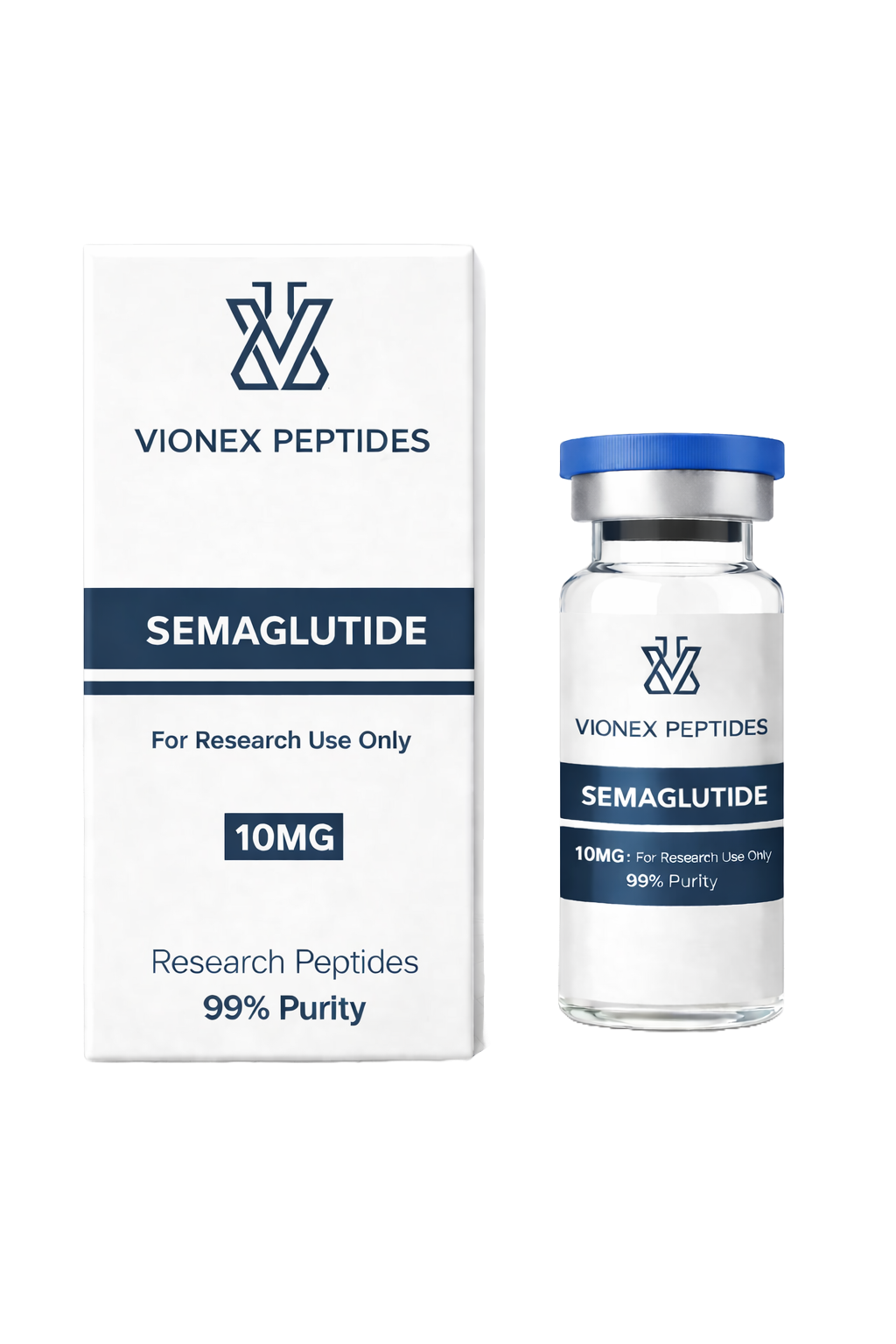
Semaglutide is a GLP-1 receptor agonist. It is a peptide similar to the hormone GLP-1 and is used extensively in metabolic research for its potential effects on glucose metabolism.
Required to reconstitute lyophilized peptides before use in research.
MOLECULAR WEIGHT
Daltons
AMINO ACIDS
Peptide sequence
STUDIES
Published research
PURITY
HPLC verified
Key findings from published peer-reviewed research studies.
Avg Weight Loss
CV Event Reduction
Published Studies
Half-Life
Average body weight reduction of 14.9% over 68 weeks
The STEP 1 trial demonstrated that weekly semaglutide 2.4mg produced a mean weight loss of 14.9% compared to 2.4% with placebo, establishing a new benchmark in obesity research.
20% reduction in major adverse cardiovascular events (SELECT trial)
The SELECT cardiovascular outcomes trial showed a significant reduction in the composite endpoint of cardiovascular death, non-fatal MI, and non-fatal stroke.
HbA1c reductions of up to 1.8% from baseline
Across the SUSTAIN trial series, semaglutide demonstrated superior glycemic control versus multiple active comparators, with durable effects over 2+ years.
Improvements in non-alcoholic steatohepatitis (NASH) markers
Research has shown reductions in liver fat content, liver enzyme levels, and histological improvements in NASH, supporting potential hepatoprotective properties.
Hypoglycemia Risk
Nausea Incidence
CV Profile
Nausea (15-20%), diarrhea, vomiting, and constipation are the most common. Dose titration protocols help mitigate these effects.
No significant increase in acute pancreatitis risk observed in large-scale trials. Regular monitoring of pancreatic enzymes is recommended in research protocols.
Slightly increased incidence of cholelithiasis and cholecystitis observed, potentially related to rapid weight loss rather than direct drug effect.
In diabetic subjects, early worsening of retinopathy has been reported with rapid glycemic improvement. Gradual dose escalation is recommended.
Research use only. Not for subjects with personal/family history of medullary thyroid carcinoma or MEN2 syndrome.
Disclaimer: This product is intended for research use only. Not for human consumption, therapeutic use, or diagnostic purposes.
4,114 Da
31
≥99%
~7 days
| Chemical Name | Semaglutide |
| CAS Number | 910463-68-2 |
| Molecular Formula | C₁₈₇H₂₉₁N₄₅O₅₉ |
| Molecular Weight | 4,113.58 g/mol |
| Peptide Length | 31 amino acids |
| Mechanism | GLP-1 receptor agonist (94% homology to native GLP-1) |
| Half-life | ~7 days (enabling once-weekly dosing) |
| Appearance | White to off-white lyophilized powder |
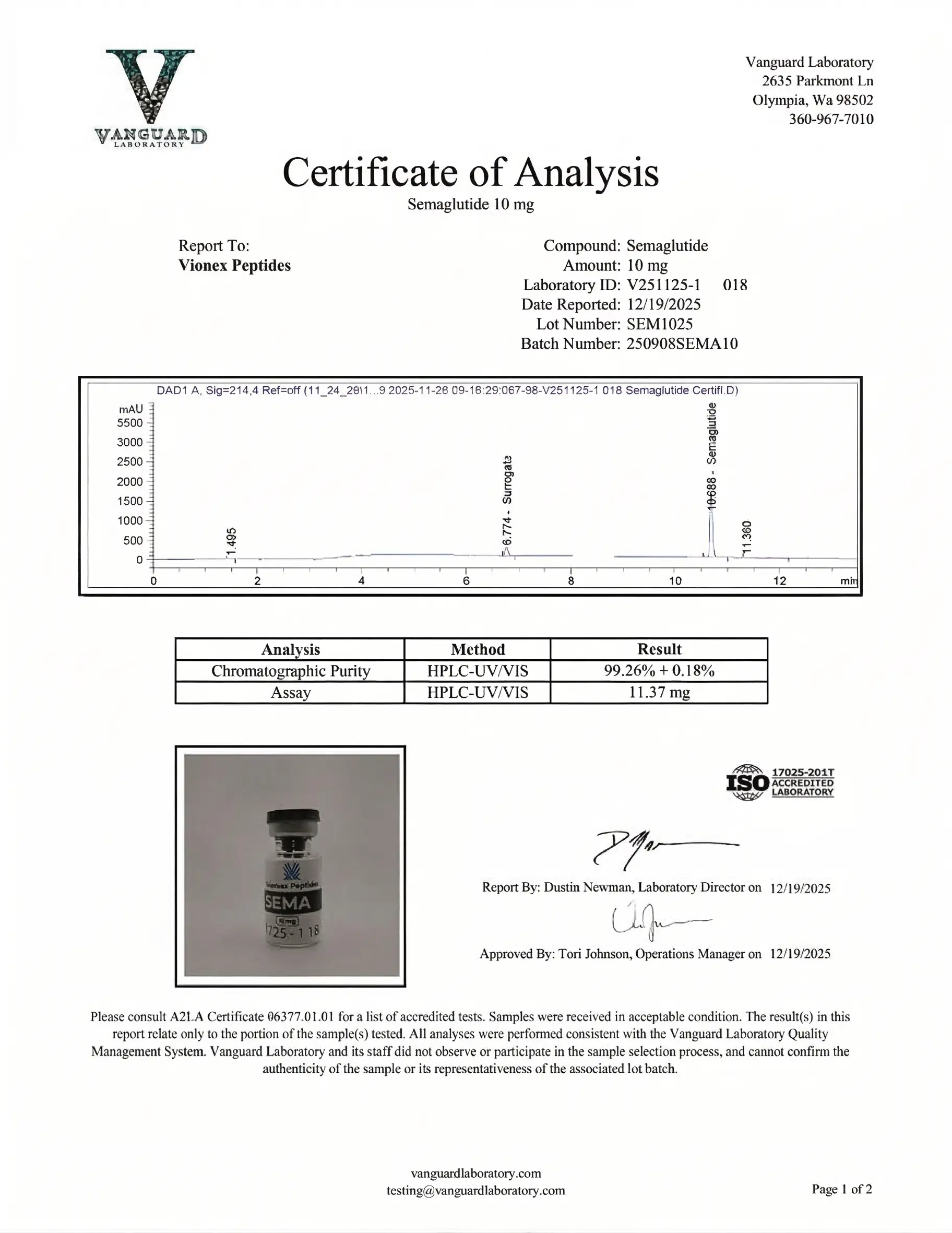
| Purity | ≥99% (HPLC) |
| Endotoxin Level | <0.1 EU/mg |
Semaglutide is a glucagon-like peptide-1 (GLP-1) receptor agonist with 94% structural homology to native human GLP-1. Its fatty acid side chain enables albumin binding, extending its half-life to approximately 7 days.
Semaglutide has one of the most extensive clinical trial programs in metabolic research, including the SUSTAIN series (diabetes), STEP program (obesity), PIONEER trials (oral formulation), and SELECT trial (cardiovascular outcomes).
Semaglutide is a GLP-1-only receptor agonist, while tirzepatide is a dual GIP/GLP-1 agonist. Both have shown significant efficacy, with head-to-head data (SURPASS-2) suggesting potential advantages for tirzepatide in certain endpoints.
Peer-reviewed publications and reference materials.
Lincoff AM, Brown-Frandsen K, et al.
New England Journal of Medicine (2023)
Our products are strictly intended for laboratory research use only. Not for human or animal consumption. By purchasing, you confirm that you are a licensed researcher or purchasing for research purposes.