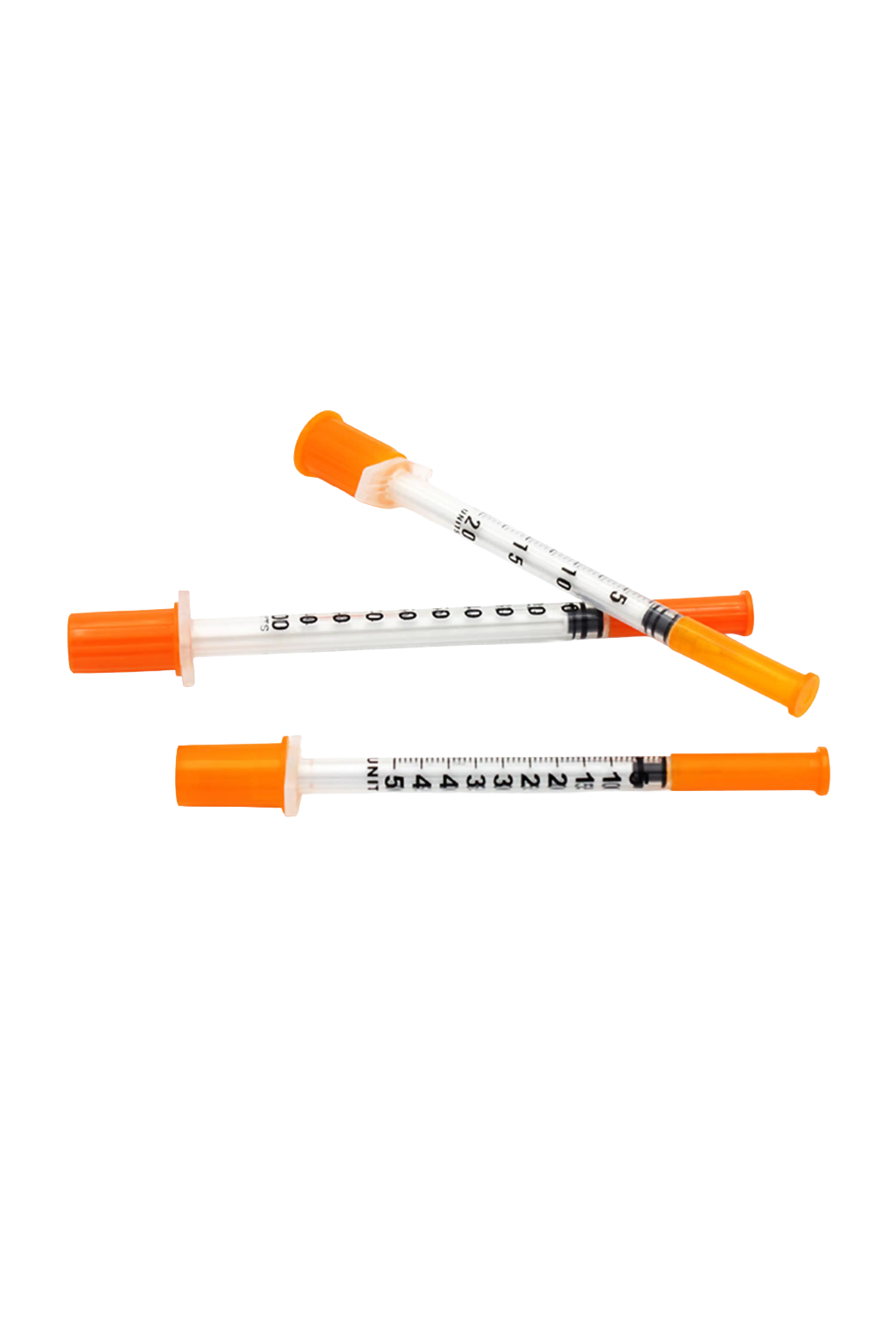
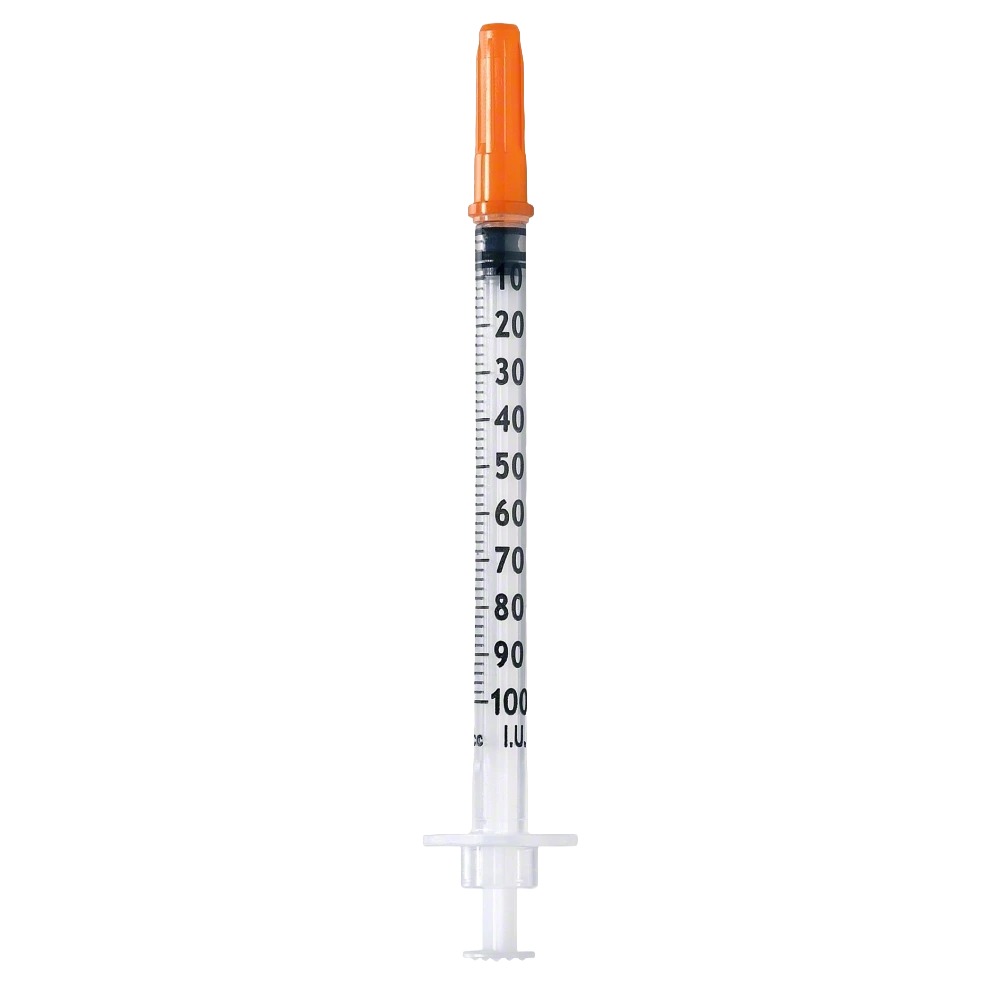
Pack of 10 sterile 1ml insulin syringes with 29G needles. Perfect for precise peptide research dosing. Each syringe is individually wrapped and ready for use.
Required to reconstitute lyophilized peptides before use in research.
CAPACITY
Per syringe
NEEDLE GAUGE
Ultra-fine
QUANTITY
Per pack
STERILE
Individually wrapped
Discover everything about insulin syringes — how they work, clinical research findings, safety profiles, compound information, and expert FAQs. Trusted, medically accurate content for patients and healthcare professionals.
Key findings from published peer-reviewed research studies.
Less injection pain with 31G needles.
Insulin waste saved per injection.
20–40% of insulin-injecting patients develop lipohypertrophy due to poor injection site rotation technique.
A landmark study published in Diabetes Technology & Therapeutics found that 31G, 4 mm needles significantly reduced injection pain compared to 29G
Subcutaneous delivery using 4–6 mm needles consistently produced stable pharmacokinetic profiles.
A meta-analysis of 14 randomized controlled trials concluded that patients using low dead-space, fixed-needle insulin syringes achieved better HbA1c outcomes.
Studies in Pediatric Diabetes confirm that 4 mm, 32G needles are safe and effective for children and lean adolescents, with equivalent glucose control and substantially lower injection anxiety scores compared to longer needles.
Needle barb forms after a single use
Infection risk eliminated with proper hygiene
Minimum rotation distance per injection
Faster absorption risk from IM injection
Insulin syringes are classified as Class II medical devices by the U.S. Food and Drug Administration (FDA)
Disclaimer: This product is intended for research use only. Not for human consumption, therapeutic use, or diagnostic purposes.
Insulin syringes are designed specifically to deliver exogenous insulin, a polypeptide hormone that regulates blood glucose metabolism.
| Property | Details |
|---|---|
| Chemical Class | Polypeptide hormone |
| Molecular Weight | ~5,808 Da (human insulin monomer) |
| Structure | 51 amino acids; A-chain (21 AA) + B-chain (30 AA) linked by disulfide bonds |
| Source | Recombinant DNA technology (biosynthetic human insulin); analog modifications |
| pH of Formulation | 7.0–7.8 (neutral formulations) |
| Concentration | U-100 (100 units/mL) — standard globally; U-200, U-300, U-500 for concentrated formulations |
| Preservatives | Metacresol, phenol, or parabens (depending on formulation) |
| Onset of Action | Varies by type: 5 min (rapid-acting) to 1–2 hrs (long-acting) |
| Route of Administration | Subcutaneous (SC); IV in clinical settings |
| Insulin Type | Brand Examples | Onset | Peak | Duration |
|---|---|---|---|---|
| Rapid-acting | Humalog, NovoLog, Apidra | 5–15 min | 1–2 hrs | 3–5 hrs |
| Short-acting (Regular) | Humulin R, Novolin R | 30–60 min | 2–4 hrs | 6–8 hrs |
| Intermediate-acting | Humulin N (NPH) | 1–2 hrs | 4–12 hrs | 12–18 hrs |
| Long-acting | Lantus, Levemir, Tresiba | 1–2 hrs | Peakless | 20–42 hrs |
| Pre-mixed | Humulin 70/30, NovoMix | Variable | Biphasic | Variable |
⚠️ Important: Always match the syringe unit scale (U-100 vs U-500) to the insulin concentration being used. Mismatch can result in dangerous dosing errors.
Peer-reviewed publications and reference materials.
This content is intended for educational and informational purposes only. Always consult a licensed healthcare professional or certified diabetes educator before making any changes to your insulin therapy or injection technique.
Our products are strictly intended for laboratory research use only. Not for human or animal consumption. By purchasing, you confirm that you are a licensed researcher or purchasing for research purposes.