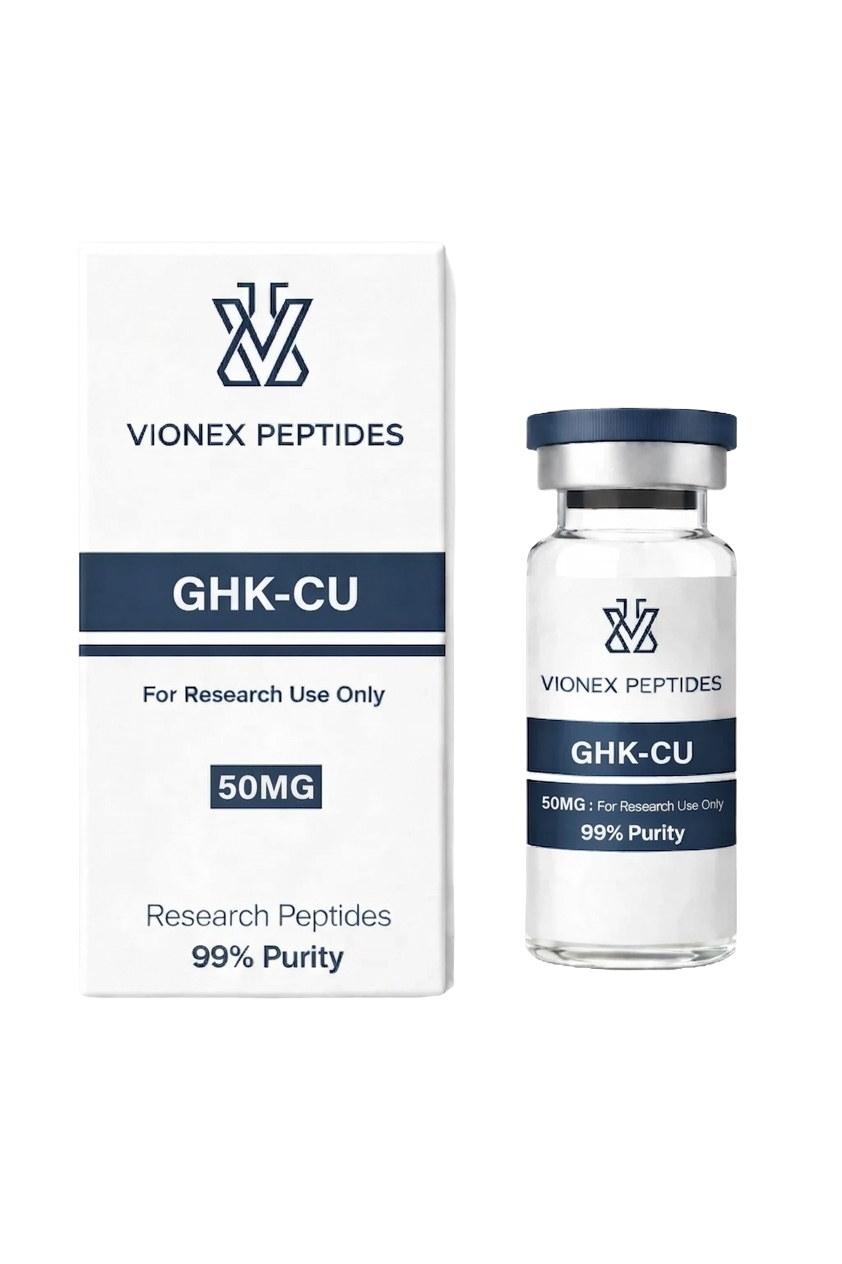
Required to reconstitute lyophilized peptides before use in research.
MOLECULAR WEIGHT
Daltons
AMINO ACIDS
Tripeptide + Cu²⁺
STUDIES
Published research
PURITY
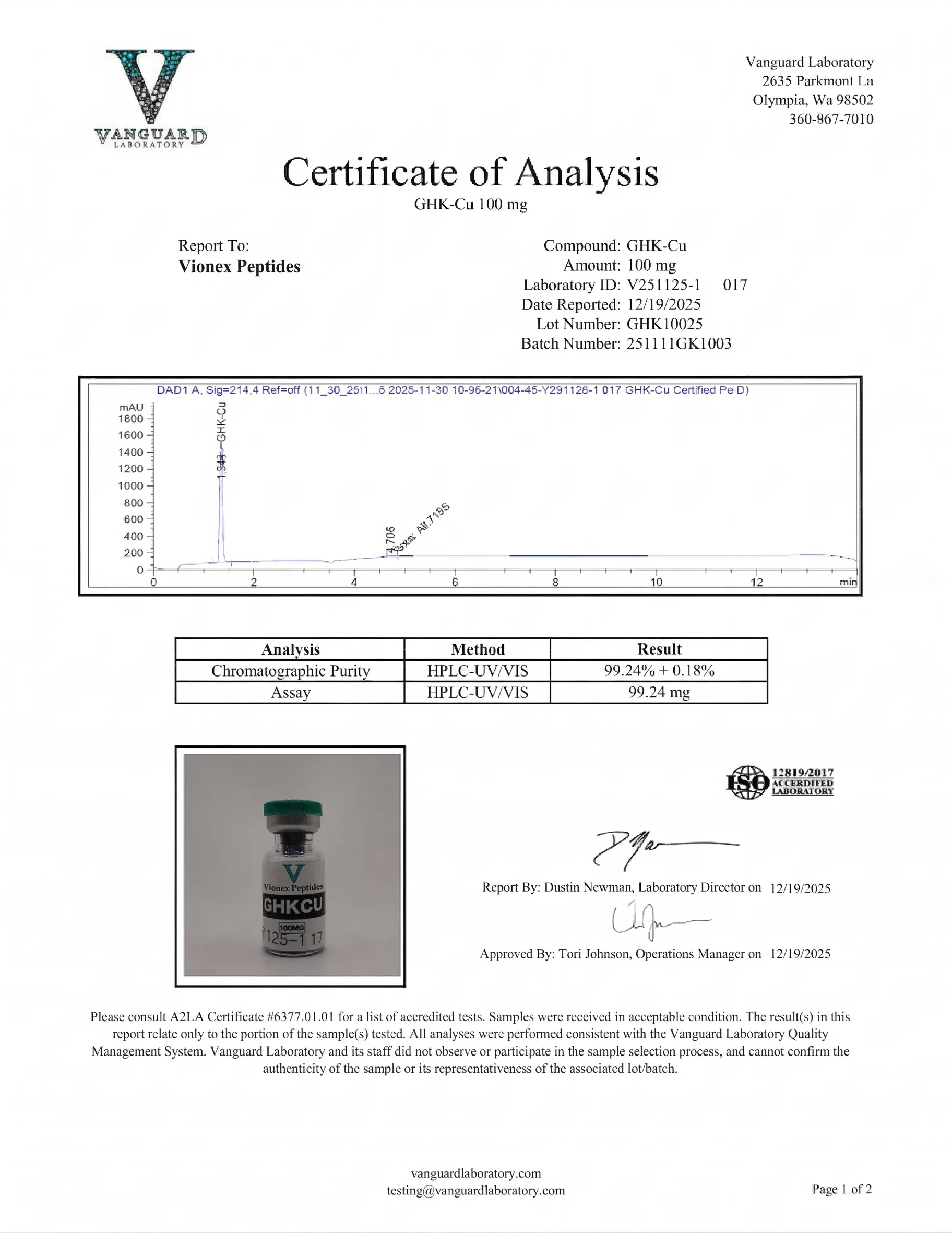
HPLC verified
Key findings from published peer-reviewed research studies.
Collagen Increase
Genes Modulated
Tripeptide + Cu²⁺
Published Studies
Stimulated collagen I, III, and elastin production in fibroblasts
GHK-Cu has been shown to increase collagen synthesis by up to 70% in dermal fibroblast cultures, while also promoting the production of decorin and other extracellular matrix components.
Accelerated wound closure and reduced scarring in preclinical models
Studies demonstrated GHK-Cu’s ability to attract immune cells, promote angiogenesis, and stimulate skin remodeling, resulting in faster, higher-quality wound repair.
Modulates over 4,000 human genes including those linked to aging
Genome-wide analysis revealed GHK-Cu influences genes involved in DNA repair, antioxidant defense, stem cell biology, and ubiquitin-proteasome system function.
Reduced pro-inflammatory cytokines while promoting tissue remodeling
Research showed suppression of TNF-α, IL-6, and TGF-β in damaged tissues, with simultaneous upregulation of anti-inflammatory mediators and metalloproteinases for controlled tissue remodeling.
Copper Chelation
Skin Irritation
Shelf Stability
GHK-Cu has demonstrated an excellent safety profile in both topical and systemic research applications with no significant adverse effects.
The copper ion is tightly chelated to the GHK peptide, preventing free copper toxicity. Copper levels remain within physiological range at research dosages.
Well-tolerated in topical formulations with no reports of significant skin irritation, sensitization, or allergic reactions in studies.
Lyophilized powder stable at -20°C for 18+ months. Reconstituted solution should be stored at 2-8°C and used within 14 days.
Research use only. Should not be used in subjects with Wilson’s disease or known copper metabolism disorders.
Disclaimer: This product is intended for research use only. Not for human consumption, therapeutic use, or diagnostic purposes.
404 Da
3 + Cu²⁺
≥99%
~15.7%
| Chemical Name | Glycyl-L-Histidyl-L-Lysine Copper(II) |
| CAS Number | 49557-75-7 |
| Molecular Formula | C₁₄H₂₃CuN₆O₄ |
| Molecular Weight | 403.92 g/mol |
| Sequence | Gly-His-Lys·Cu²⁺ |
| Copper Content | ~15.7% by weight |
| Appearance | Blue to blue-green lyophilized powder |
| Solubility | Freely soluble in water |
| Purity | ≥99% (HPLC) |
| Endotoxin Level | <0.1 EU/mg |
GHK-Cu is a naturally occurring copper complex of the tripeptide glycyl-L-histidyl-L-lysine. It was first identified in human plasma and decreases with age, from about 200 ng/mL at age 20 to 80 ng/mL by age 60.
The copper ion is essential for GHK-Cu’s biological activity. It facilitates the peptide’s interaction with cell receptors and is required for its effects on collagen synthesis, wound healing, and gene modulation.
Yes, GHK-Cu is widely used in both systemic and topical research applications. In topical formulations, it penetrates the skin and has shown effects on collagen remodeling and wound healing.
Store lyophilized GHK-Cu at -20°C protected from light. The blue color of the powder is normal and indicates proper copper chelation. Reconstitute with sterile or bacteriostatic water.
Peer-reviewed publications and reference materials.
Kang YA, et al.
Archives of Pharmacal Research (2019)
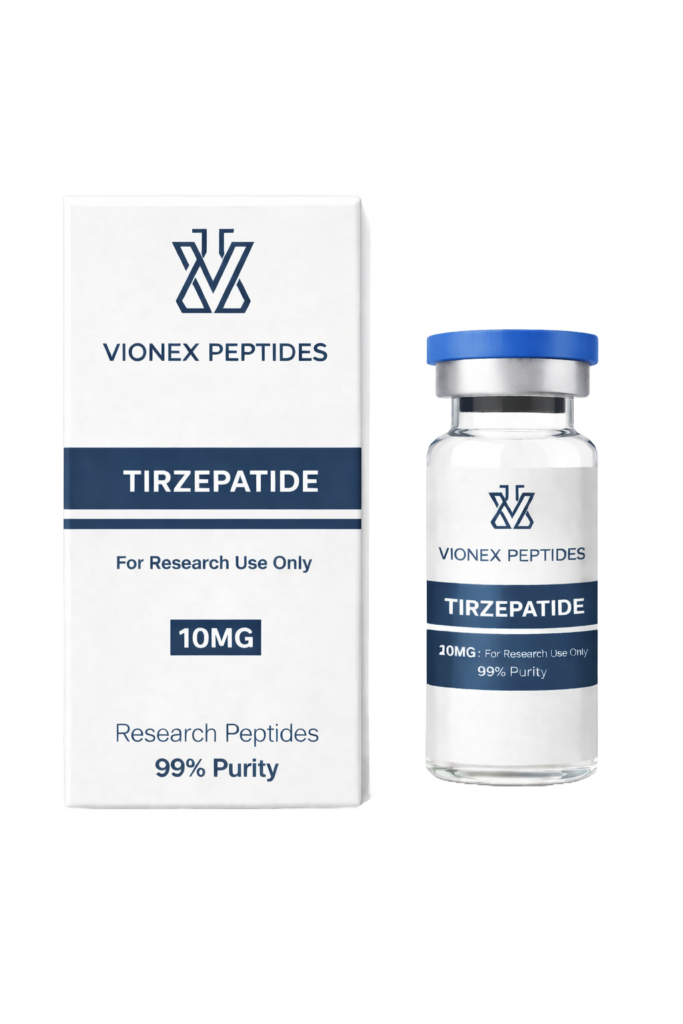
Our products are strictly intended for laboratory research use only. Not for human or animal consumption. By purchasing, you confirm that you are a licensed researcher or purchasing for research purposes.